

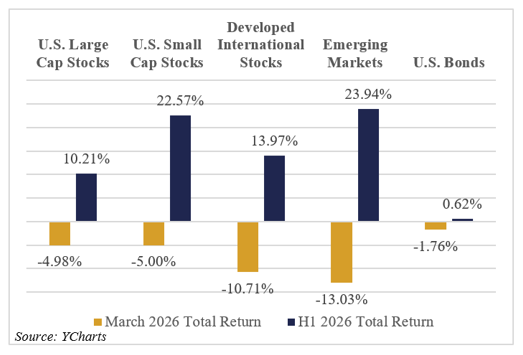
While rising tensions in the Middle East, higher oil prices, and concern about the impact on corporate profits were the cause of the decline in Q1, those same factors boosted returns in Q2, due to easing tensions, lower oil prices, and corporate profits that beat investor expectations. You may recall us opining in our April letter that markets may have gotten carried away with excessive emotional reactions to negative news, rather than focusing on fundamental market factors.
Investors who reacted emotionally to negative news and “waited until things settled down” to reinvest in the market may have captured all the pain of Q1 without seeing any of the recovery in Q2. Because the timing of these rebounds is difficult to predict, staying invested through periods of volatility is critical to capturing the market’s long-term growth potential. Ultimately, maintaining a disciplined investment strategy during downturns can help investors avoid turning temporary market declines into permanent losses.
On average, equity markets see a 5% pullback three times a year, a 10% correction once a year, and a 20% decline once every 3.5 years. While sharp declines may be unsettling, historically, markets have recovered and rewarded investors who remain focused on long-term objectives.
Recent Comments