

This past weekend, we woke up to the news that a U.S.-Israel coalition attacked Iran, its leaders, and strategic outposts. Global conflicts influence market sentiment and can spark short-term volatility. Yet, in the long term, investors and markets tend to shrug off near-term concerns. Historically, geopolitical conflicts have little lasting effect on stocks.
A historical analysis of U.S. stock market performance during times when the U.S. threatened or used military force abroad shows that there has been little relationship between war and market performance. The key takeaway:
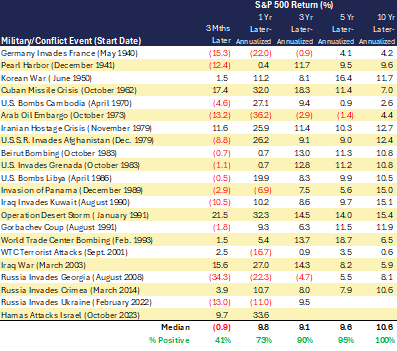
stocks have historically risen or fallen based on traders’ and investors’ expectations about earnings. Wars have little impact on the ability of most of these companies to earn money. Disney will still sell movies and attract theme park attendance. Pepsi will still sell bubbly sodas. Pfizer will still sell and develop pharmaceuticals. Ford will still sell cars. Microsoft will still sell software.
Stock markets reflect investors’ beliefs about companies’ future earnings. Bond markets reflect bondholders’ beliefs about the probability of interest payments and principal repayment. Professional investors act on what they know, often using history as a guidepost, which includes recognizing that wars have historically had little influence on markets.
Individual investors may get caught up in the emotions that media coverage of war can inflame. Ominous headlines and graphic images of death and destruction may stimulate a flight response from investors of “I need to take action.” In times of strife, obscure judgments can lead to erroneous decisions. Sometimes a strongly felt but inappropriate impulse to “do something” could prompt an investor to sell stocks and bonds and retreat to cash, which they may hear described as a “safe haven” in times of war. A review of major historic conflicts indicates that post-event volatility tends to be short-lived.
Pursuing peace of mind may be the best way for individuals to manage emotions. Emotions driven by disorderly geopolitics and bad news can tempt one to veer away from established investment plans. It is best to plan for a rough road ahead than to react to it when it comes. Owning a diversified portfolio including U.S. stocks, international stocks, bonds, and alternative strategies can help temper stocks’ volatility and ease emotional anxiety.
Recent Comments