
Midterm elections are commonly viewed by voters and political commentators as a test of public satisfaction with the current state of affairs. With congressional control hanging in the balance, both major parties pour everything they have into the race. The victor in November gains the power to shape the legislative direction of the country for the following two years. While past trends suggest that the ruling party typically suffers losses, such patterns are not guaranteed to hold every time. While every electoral cycle brings its own unpredictability, midterm elections appear to have a distinctive influence on the stock market. Research suggests that U.S. equities tend to display certain notable patterns, specifically during years when midterm elections take place.
During the early part of midterm election years, equity markets have historically underperformed, often remaining relatively flat until the election draws near. This aligns with the well-known principle that markets are uncomfortable with the unknown. Early in the year, investors face greater ambiguity about both the election’s results and its potential economic consequences. As election day approaches, markets have typically experienced an upturn, with that momentum generally being carried forward even after the votes have been counted, regardless of the result.
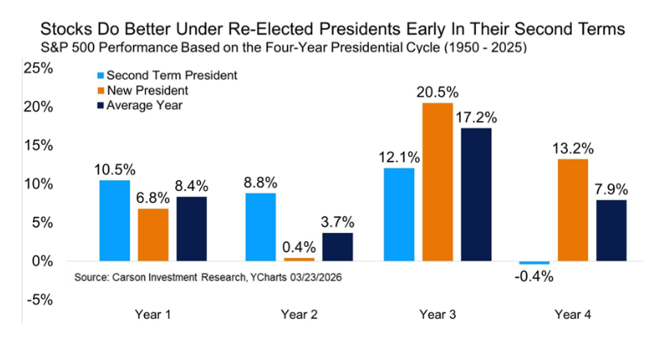
For this cycle, the market has largely defied the more cautious historical script as midterm uncertainty has not been a significant factor. After the market went down in March from the Iran conflict, it has rebounded to new highs since, with corporate earnings providing the fuel for the vertical advance. S&P 500 corporate profits surged well past analyst forecasts in the first quarter, climbing 28% compared to the same period last year. For the full year, earnings are now projected to rise by 23%. To put that in perspective, profit growth at this level has only ever been seen during recoveries following economic downturns, making this a truly unusual moment.
For now, the market’s attention remains firmly on the strength of corporate earnings. However, as November draws closer and the political landscape comes into sharper focus, it is possible that election-related uncertainty could begin to weigh on investor sentiment, bringing with it the kind of volatility that has historically characterized midterm election years. Whether this earnings-driven momentum proves resilient enough to weather that uncertainty remains to be seen. As always, staying informed and maintaining a long-term perspective will be key for investors navigating the months ahead.
Recent Comments