

Two and a half centuries after declaring independence from Great Britain, we live in a world that the Founding Fathers could scarcely have imagined. From gene-editing therapy to commercial space travel and AI on our smartphones, it’s safe to say things have changed quite a bit since our nation’s founding.
In a similar vein, U.S. stock market indexes have changed significantly from their original forms. One of the first stock market indexes was the Dow Jones Industrial Average (“the Dow”), created in 1896 by Wall Street journalist Charles Dow to track the 12 most influential companies. At its inception, the index stood at roughly 40 points. At the time, the Dow was a revolutionary development that enabled market participants to gauge overall market performance easily. Today, the Dow has reached over 50,000 points and consists of 30 U.S. stocks selected by a committee. When General Electric was removed from The Dow in 2018, it became the last of the original 12 companies to be removed from the index.
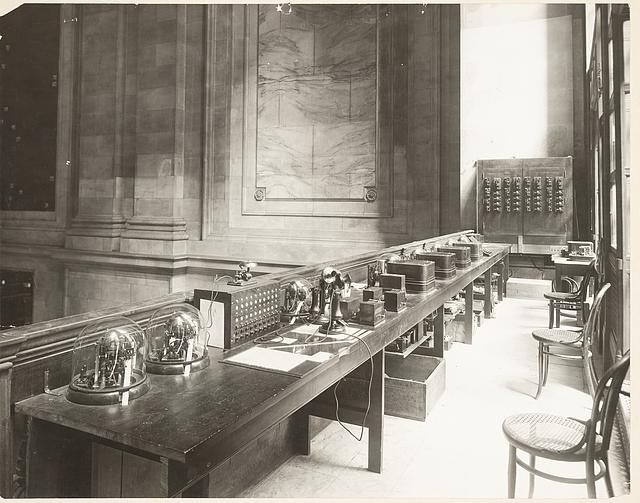
Automatic ticker apparatus, New York Stock Exchange. Central control station
Fast forward to 1957, when Lew Schellbach introduced the S&P 500 index. Along with it came the groundbreaking technology of electronic calculations, allowing the index to be updated and distributed hourly rather than daily. The index originally comprised 425 industrial stocks, 25 railroad stocks, and 50 utility stocks, accounting for over 90% of total U.S. market value. In 1988, the index shifted to the top 500 companies by market cap, regardless of industry, allowing software companies to enter the index. Over the years, the index has amended its rules several times, excluding foreign companies, adding REITs, and implementing profitability requirements. Of the original 500 companies, approximately 50 are still tracked by the index.
Recently, the Nasdaq-100 made headlines when it adjusted its rules to allow large companies to enter the index after only 15 trading days, a move viewed as accommodating companies such as SpaceX and other anticipated AI-related IPOs. Changing the rules for inclusion in an index is not uncommon; as the market changes, so must the indexes that track it.
It’s incredible to think that just 250 years ago (by historic standards), 13 breakaway colonies formed the foundation of the biggest and most dynamic economic engine the world has seen. Do you think the Founding Fathers could have foreseen what their creation would become? Have a wonderful 4th of July celebrating 250 years of American innovation, opportunity, and independence.
Recent Comments