

While the U.S. has maintained a dominant lead over international markets for nearly two decades, we are beginning to see a structural shift in how foreign companies operate. Management teams in regions like Japan and Europe are increasingly adopting Americanized corporate strategies, prioritizing share repurchases and balance sheet efficiency to drive shareholder value. This internal evolution is being reinforced by a global move toward fiscal stimulus and deficit spending, mirroring the economic tailwinds that have supported U.S. growth for years. By maintaining international exposure, we aim to capture this catch-up potential as these undervalued markets align with the high standards of performance and capital allocation set by the U.S.
Between November 27, 2007, and December 24, 2024, the S&P 500 outperformed developed international stocks, as measured by the MSCI EAFE. A large part of the reason why the U.S. has outperformed is due to the fact that the vast majority of the most innovative large companies in the world are in the U.S. However, one other reason is that American companies typically put a greater focus on corporate capital allocation, running them for the benefit of the shareholders, something that has not always been the case in other countries. We are now starting to see improved global capital allocation and the “Americanization” of foreign equities. This could be a long-term tailwind for these stocks.
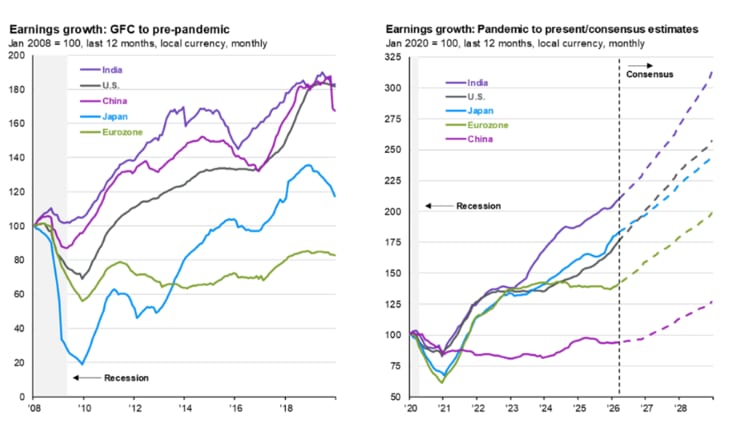
For example, Japanese companies that used to reward shareholders with Yutai (gifts such as discount cards and food) have pivoted to share repurchases and focusing on their balance sheets, particularly market-related ratios such as Price-to-Book ratio and Return-on-Equity. European companies, which were previously allergic to anything other than mediocre dividends, are wading their way into buybacks. This transition marks a shift toward a more holistic ‘total return’ mindset, where shareholders benefit from both steady income and the upward stock price pressure. The bottom line is these companies are finally being run for the benefit of shareholders.
Beyond these internal corporate shifts, a powerful external tailwind is also beginning to take shape: a global move toward fiscal stimulus. For much of the last decade, the U.S. economy has benefited significantly from government deficit spending to fuel growth. Today, many countries are beginning to follow that same playbook. By running larger deficits to modernize infrastructure and stimulate domestic demand, these countries are creating a more supportive environment for their local businesses to thrive.
This change is significant because it marks a departure from the austerity mindsets that often held international markets back. When governments spend to support their economies, it generally flows to corporate earnings. For an investor, this means that international equities are now benefiting from a “double engine” of growth: management teams that are finally prioritizing shareholders, and governments that are finally spending to stimulate their economies.
While the U.S. remains the benchmark for innovation and shareholder value, the rest of the world is finally catching up to the American model. By combining more disciplined management teams with a new era of government stimulus—all while trading at a significant discount—international equities are beginning to bridge the gap. We are not looking to move away from the strength of the U.S. market, but rather to ensure your portfolio is positioned to capture the growth as these global players finally begin to operate by the same rules of success.
Recent Comments